
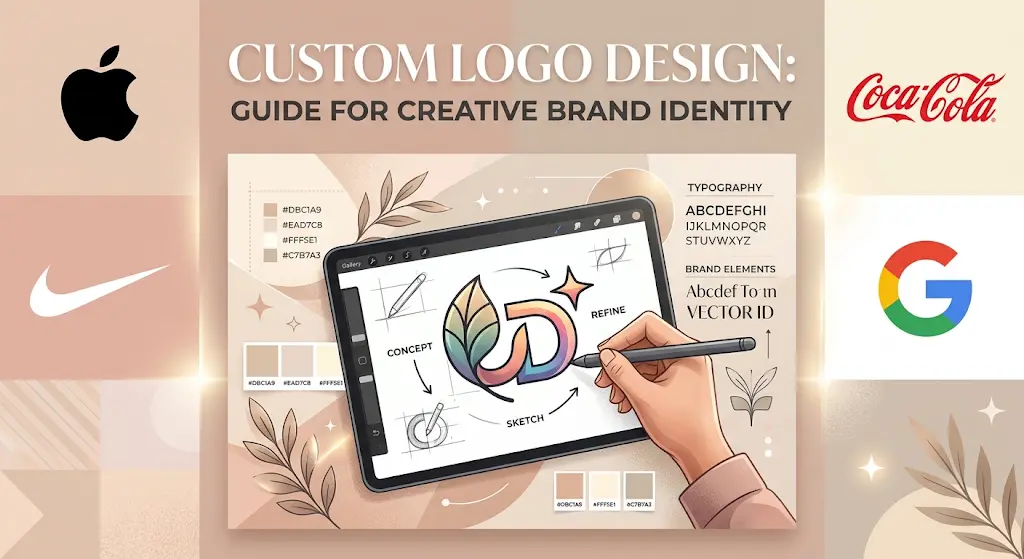
Custom Logo Design: Guide for Creative Brand Identity
Table of Contents
Do you have to see the name of Apple to spot an iPhone? Not really, right? This is because the bitten apple logo is enough. This is actually the power of an impactful icon!
Most of us often recognise companies without even seeing their names. But how? Well, the answer is their logos!
You may not know this, but a logo is often the first thing people notice about a business. It helps create a memorable impression and gives customers something familiar to connect with your brand.
However, creating a commanding logo involves much more than choosing attractive colours or drawing an interesting shape. So, how can you design one?
Let’s explore how you design a high-quality trademark that supports your brand identity.
What Logos Actually Are
You might have seen so many logos by now. But do you know what they actually are? Let’s understand!
A logo is actually a graphic or typographic symbol that visually represents not only a brand and business but also an institution to ensure instant recognition.
Many people often think that they are just a pretty picture or snazzy font. Well, that’s not true! A logo basically acts as a shorthand visual anchor for a company’s identity, values, and reputation.
You can not only attract attention and convey your message but also help people remember who you are and recall your services faster with a simple logo design.
However, you must remember that a logo is only one part of your brand identity. Your brand identity includes not only colours and fonts but also custom web design and the overall way your business presents itself.
What Are the Types of Logo Design?
Now that you know what a logo actually is, we’ll take a look at its different types.
There are seven core types of logo designs, alongside modern variations used to build brand identity. The top ones include wordmarks, monograms, letterforms, pictorial marks, abstract logo marks, mascot logos, and emblem logos.
Wordmarks
Wordmarks are also called logotypes. They basically use the complete business name as the main design element.
They rely not only on creative typography and font selection but also on spacing and lettering to create recognition.
You must have seen logos of Google and Coca-Cola, haven’t you? Well, they use distinctive wordmark styles. This type works particularly well for businesses with short and memorable names.
Monograms
Monogram logos, on the flip side, use the initials of a business instead of its complete name. They are particularly useful for companies with long names that may look crowded in a traditional logo.
Letterforms
Letterform logos focus on a single letter, usually the first letter of a company’s name. They are not only simple and compact but also easy to use across different platforms.
One of the most common examples of letterform logos is Netflix’s stylised letter ‘N’.
Pictorial Marks
On top of that, pictorial marks basically use recognisable images or symbols. This helps them represent a brand. Are you thinking about Apple’s bitten apple? Yes, that’s one of the most famous pictorial mark logos.
These logos can actually communicate a brand’s personality through a single image. However, new businesses may need to display their names alongside the symbols until customers become familiar with them.
Abstract Logo Marks
Abstract logos are also quite popular. They basically use not only unique shapes and patterns, but also geometric designs instead of recognisable objects.
Nike’s swoosh is a famous example. These designs give businesses an opportunity to communicate ideas such as movement, creativity, growth, or innovation.
Mascot Logos
Besides that, mascot logos display illustrated characters, animals, or fictional personalities. They are commonly used not only by sports teams and restaurants but also by children’s brands and entertainment businesses.
Yes, it’s true that a mascot can make a brand appear friendly. And they give customers a character they can easily remember.
Emblem Logos
Lastly, Emblem logos combine text and images within a single shape, such as a badge, shield, or circle.
They are often used not only by schools and universities but also by sports clubs and traditional businesses.
In addition to this, their detailed appearance conveys authority. However, you must keep in mind that overly complicated emblems can be hard to read at smaller sizes.
Why Is a Custom Logo Design Important for Brand Identity?
Have you ever thought about why every brand aims for a visually appealing logo? Well, this is because a custom logo design is quite crucial for brand identity. But why?
Well, the design of your logo not only offers instant brand recognition and differentiation but also builds trust and professionalism.
Instant Brand Recognition
When you see a familiar logo on a shopping bag, website, or product package, you suddenly recognise the company before reading anything else. Right?
This is what you can achieve with a top-notch logo. Plus, repeated use of the same visual identity helps customers remember your business and recognise it across various platforms.
Differentiation from Competitors
We all know that every industry has competing businesses. A unique visual identity helps customers distinguish your company from others who are offering similar products or services.
Instead of copying popular designs, you must ensure that you create something that reflects your own business personality.
You can consider not only original shapes and thoughtful typography but also meaningful symbols. This can help your brand stand out effortlessly.
Trust and Professionalism
You must’ve also heard that first impressions matter. Well, they really do! A poorly designed or inconsistent logo can make a business appear less professional.
On the other hand, a clear and well-planned design shows that you actually care about your brand’s presentation. This can help create a positive impression and allow customers to take a look at your products or services.
How Can You Design a Top-Notch Logo for a Creative Brand Identity?
But the main question is, how can you design logos for a creative brand identity?
You must begin by understanding your brand and target audience. Also, research your competitors and choose a logo style that fits.
In addition to this, you must select not only the right colours and fonts but also the right shapes. Remember that you need to create a consistent visual identity. And don’t forget to test your logo.
Understand Your Brand and Target Audience
Before opening any design software, you need to understand what your business represents.
You can ask yourself a few questions.
- What products or services does my business offer?
- Who are my ideal customers?
- What makes my business different?
- What personality should my brand communicate?
Research Competitors and Choose a Logo Style
Once you figure out your brand and intended audience, you have to explore logos used by businesses in your industry. You must notice not only their colours and typography but also their symbols and overall appearance.
Just make sure that you are not copying their designs. Instead, you need to identify common patterns and discover opportunities to create something different.
Choose a logo type that suits your business name and personality. A combination mark can be a practical starting point because it brings together a brand name and a symbol.
Select Colours, Fonts, and Shapes
You may not realise this, but every design element contributes to your brand’s personality.
Colours can create different emotional impressions. Yes, you read that right! Blue is commonly associated with trust. Also, green often suggests nature or growth. However, you must keep in mind that colour meanings depend on the audience and context.
Similarly, fonts communicate different styles. Serif fonts can feel traditional. Besides that, clean sans-serif fonts often appear modern.
Remember that you need to choose a limited colour palette and readable typography. Most importantly, make sure all the elements work together.
Create a Consistent Visual Identity
Many businesses don’t really focus on their logos. As a result, their logos look disconnected from the rest of your marketing materials.
Custom brochure design should follow the same brand colours, fonts, and visual style as your logo. This creates a consistent appearance across printed materials and helps customers recognise your business.
On top of that, you need to develop a simple brand guide that explains how you can use not only your logo and colours but also your fonts and spacing. It will make future marketing designs much easier.
Test Your Logo
A logo may look fantastic on a computer screen but become difficult to recognise when displayed in a small size.
This is why you need to test your design not only on business cards and packaging but also on social media profiles and websites.
Besides that, you must pay special attention to your website design, where your logo may appear in website headers, navigation bars, and mobile screens.
You should also check whether the design works well against light and dark backgrounds.
FAQs
Are custom logo designs vital for branding?
Ans. Yes. Custom logo designs are vital for branding. This is because they act as a visual symbol. It sets your business apart and shapes how customers look at your brand from the very first glance.
Can I redesign my existing business logo?
Ans. Yes. You can redesign your existing business logo at any time. This will help you not only to reflect new goals and changing audiences but also to improve your brand identity.
How can you create a powerful logo for branding?
Ans. To create a powerful logo, you first need to figure out your brand and target audience. Besides that, you must not only research your competitors and choose a logo style but also select the right colours and fonts. Make sure that you create a consistent visual identity and test your logo.
All in All!
A creative logo is much more than an attractive picture. It is an important part of your brand identity that helps customers not only recognise and remember but also connect with your business.
You must ensure that you know your brand and target audience. Also, select suitable colours and test your design across different platforms. In addition to this, you need to focus on simplicity, originality, and consistency rather than following every new design trend. Most importantly, you need to create a logo that tells your brand’s story. When your design reflects what your business stands for, it becomes easier to build a recognisable and lasting identity.

I am a seasoned designer and content creator for Logo Design Ireland Blog, where I combine design expertise with actionable advice for business owners. My articles cover everything from logo trends and branding psychology to practical design tips that help Irish entrepreneurs elevate their brand identity.