
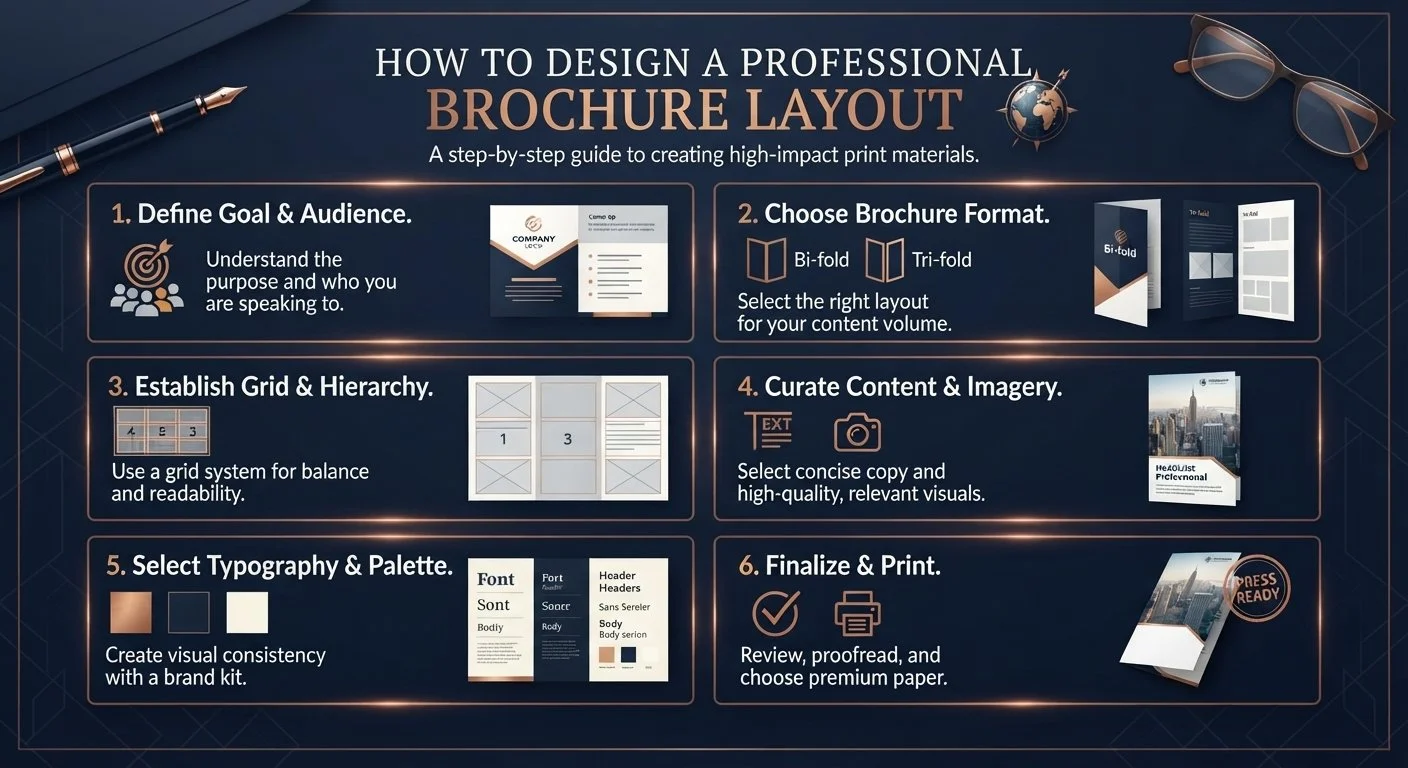
How To Design A Professional Brochure Layout
Table of Contents
A well-designed brochure can still do what digital marketing cannot in an age of inbox fatigue and endless scrolling. It can put a tangible and focused message directly into someone’s hands. Brochures are still a versatile marketing tool that businesses of any size can use.
You can use them at trade shows, inside direct mail envelopes, in waiting rooms and on retail counters. A brochure only works if it is designed well enough to get picked up, read, opened, and acted on. This blog is a practical guide to creating brochures for businesses that earn attention and drive results.
What Is A Brochure And Why It Still Works
A brochure is a marketing material document that can represent your company, products or services. It contains multiple panels through strategic folding that create more space for your story to unfold, literally and figuratively. Brochures remain one of the most crucial pieces of marketing collateral for businesses of all sizes, along with catalogues, flyers, and price lists.
Brochures remain relevant in an increasingly digital world. They offer something digital content often cannot, which is a tangible and physical connection with your audience. Most successful businesses combine traditional print brochures with digital alternatives like interactive PDF flipbooks to create a comprehensive marketing approach that reaches customers through multiple channels. According to a recent study, 20% of US consumers still prefer to receive mail in brochure form.
Types Of A Brochure
The fold of your brochure that you choose can determine how your reader will experience the content. Each fold type can create a different number of panels, a different visual rhythm, and a different reading sequence.
1. Bi-Fold
It is a single fold down the centre that creates four panels, two on the outside and two on the inside. This format gives the most space per panel and works best for pieces that rely on images or need room for detailed information. Bi-folds are the strongest choice for real estate listings, event programs, product showcases and restaurant menus.
2. Tri-Fold
This is the most common format of the brochure. It contains two parallel folds that create six panels that fold inward like a letter. Tri-folds are popular because they fit neatly and work with brochure racks. You can use it for company overviews, welcome packets, service menus and general marketing pieces. The inside flap panel can create a natural reveal, which you can use to build curiosity.
3. Z-Fold
These are the same two folds as a tri-fold, but the panels are zigzag instead of folding inward. This creates a continuous surface when fully opened, making it ideal for timelines, maps, step-by-step processes or any content that benefits from a wide panoramic layout. Z-folds can also stand up on their own, which is beneficial for countertop displays.
4. Gate Fold
It has two panels that fold inward to meet in the centre, then open outward like double doors. Gate folds offer a dramatic reveal and are perfect for high-impact presentations, product launches, and luxury brand marketing where you want readers to experience a moment of discovery when they open the piece.
Sizes And Dimensions Of Typical Brochures
Choose the right size before you start to make a brochure like poster design Ireland. The following are the typical dimensions that professionals often use.
- 8.5” x 11” (US Letter): This is the standard size throughout North America, which offers familiarity and ease of use.
- 8.5” x 14”: This size can provide additional space that makes it ideal for a content-heavy trifold brochure.
- A4 (210 x 297 mm): This is the international standard that is used widely across Europe and many other countries.
When you create printable brochure paper for home or office use, sticking to standard formats like A4 or Letter ensures compatibility with most printers. You should remember to include crop marks and bleed areas for clean printing in professional-format PDFs.
What Should I Include In A Brochure?
A good brochure is not only about decoration or adding anything that looks good. You need to include the right elements. Below are characteristics that you should add when making a brochure.
1. Compelling Headline
Start with an attention-grabbing headline that clearly communicates your main benefit or message. The best is to use action verbs to create urgency or curiosity. For example: “Turn Clicks Into Customers, and Browsers Into Buyers.”
2. Subheadings
Follow a headline with a brief subheading that defines it and clarifies your promotion. This can guide readers deeper into your content without overwhelming them.
3. Visuals
Use high-quality images and graphics that are central to your brochure design Ireland. They must engage readers visually and often communicate more effectively than text alone. Pick those visuals or branded photographs that align with your brand identity, like clean and modern for tech companies, and warm and inviting for hospitality businesses.
4. Value Proposition
You should clearly explain what makes your products or services unique, focusing on benefits to address your readers’ specific needs. For example: “We are helping ambitious brands to scale faster through high-converting SEO, paid media and full-funnel growth campaigns.”
5. Call To Action (CTA)
Add a clear, prominent instruction that tells readers what to do next. Your CTA should stand out, whether it is for making a purchase, visiting your website or scheduling a demo. For example: Call us now for a free consultation or visit our website to get started today!
6. Contact Information
Add easy-to-find contact details in your brochure, like your phone number, email, website and social media profiles. You can use icons for visual clarity and quick reference.
7. Company Overview
You also need to write a brief description of your company or product to help build trust with the reader. Ensure this is concise and focus on writing what sets your business apart from the competition. For Example: “Our company has been a leader in providing digital marketing services for small businesses to large enterprises for over 20 years.” You must keep it customer-centric with your focus on how your company meets the requirements of your target audience, instead of detailing your entire company history.
8. Testimonials
You should include reviews or testimonials from your satisfied customers to add credibility and trustworthiness to your brochure. This way, people can trust your products or services more because others have already used and recommended them. “They have provided the exact voice for our brand with their creative strategy and social media management. Organic web traffic has surged and our follower engagement gets higher than it has ever been” — Elena Rostove, Founder of Small Business. You must use real quotes with customer names and positions. This helps add authenticity to the testimonial.
9. Promotions Or Special Offers
You should make your discounts or limited-time offers prominent in your brochure, if you have any. This can create urgency and incentivise readers to act instantly. For example: “You can get 20% off on your first order—limited-time offer!” The best is to highlight these offers with a bold box or contrasting colour to make them stand out.
10. Branding And Design Consistency
Make sure your brochure’s branding and design reflect your company’s identity. This should include logo design placement, colour scheme and font choices that align with your website and other marketing materials. Maintain consistency across all the marketing materials to strengthen your brand recognition and keep your message cohesive.
11. White Space
You should not fill your brochure with too much text or images. Adding white space is crucial for readability and overall visual appeal. It can ensure that all the key information stands out and does not overwhelm the reader. You should balance text and images with sufficient margin space and leave room between sections. This makes it easier for readers to absorb information.
How To Start Designing A Brochure
Every business wants its brochure to look beautiful. More importantly, you want to communicate your message clearly. Before you start to design your document, you should be clear about these things.
- Target: Find out who your ideal customer is. You should picture them. Ask yourself why your customers should buy your product or service and why they should read your brochure.
- Reason: Identify the reason for designing a brochure, selling a product and convincing an audience. You must define your goal.
- Message: You should build a way or message to convince your readers. Do you need to highlight the pain you solve first, or do you need to describe what you are promoting? You must define it before everything. Choose them now and everything else, like the form, the layout and the graphic, comes after this step.
- Purpose: Find out if this is a school event, fun event, product launch or a promotion of a B2C or B2B product.
Frequently Asked Questions
How do I choose a brochure design format for my project?
You must begin designing with a clear goal. Tri-fold is the king for most things, and it fits in any envelope with six panels for a quick story that is perfect for trade shows. You should go for bi-fold for simple menus, gate fold when you want the fancy reveal and Z-fold for steps or maps.
What are the best brochure layouts that actually work?
The best ones are those that keep it simple, like a killer headline on the cover to hook ’em, short chunks inside with headings and white space, high-quality visuals and images and a call to action at the end. Think of it as a story that pulls you panel to panel without overwhelming you.
How to make brochures that match my brand?
You should choose just 2-3 colours from your brand palette, maximum two fonts (bold for headings and a clean one for body content) and your logo everywhere. Must add white space so it can breathe, not cram it.
Final Verdict
A well-designed brochure is still one of the most effective marketing tools, whether you are promoting a product, showcasing your brand, or launching a campaign. You should understand the different types of brochures, choose the right size and format, and apply thoughtful design to create brochures that inform, inspire and convert.

I am a seasoned designer and content creator for Logo Design Ireland Blog, where I combine design expertise with actionable advice for business owners. My articles cover everything from logo trends and branding psychology to practical design tips that help Irish entrepreneurs elevate their brand identity.