
Why Brochure Design Is Still a Smart Idea
Table of Contents
Remember those glossy little booklets we used to grab from hotel lobbies, cafes, or event stands? Turns out… they are not just nostalgic keepsakes. They are still one of the smartest, most powerful branding tools a business can use today.
And honestly? In a world drowning in screens, a well-designed brochure feels refreshingly real.
Because here is the thing, people trust what they can hold. The colors, the texture, and the way a design unfolds… it all creates a tiny moment of connection that digital ads can’t always match.
A brochure does not disappear in a swipe. It stays on desks, in handbags, on countertops, quietly selling your story long after the first glance.
And maybe that is why the smartest brands still invest in them.
So, if someone picked up your brochure today, what story would it tell before they even read a single word?
Let brochure design play smartly
Brochures travel in a way digital content can’t. They move from hand to hand, desk to drawer, sometimes even fridge to pinboard.
Each stop leaves a tiny impression. A reminder. A spark of curiosity.
That physical presence gives your brand a longer, warmer life.
And let’s be honest, people skim online. They scroll fast. They forget faster. But when someone opens a brochure, they pause. Even for a few seconds, their attention is yours.
The fold, the layout, the colors. They guide the reader, almost like a gentle conversation on paper.
That is where the online brochure maker shows their magic. A brochure becomes more than marketing, something more like an experience. Something that feels personal. Deliberate. Crafted.
And in a world full of noise, that feeling alone can make your message unforgettable.
Why are brochures still important?
Brochures are still important because they do something digital marketing can’t fully replicate. They create a physical connection with your audience. Here is why they continue to matter.
1. They build trust instantly
A professionally designed brochure signals credibility. It shows effort, investment, and seriousness. People instinctively trust something they can hold, much more than a random ad flashing on their screen.
2. They stick around longer
Digital content disappears in seconds. A brochure stays on a desk, in a bag, or on a counter. It keeps reminding people about your brand without you spending another rupee on ads.
3. They give people a calm space to explore
Online, people skim and scroll. But with a brochure, they pause. They flip through it at their own pace. That quiet, uninterrupted moment is priceless for storytelling and branding.
4. They make your brand feel real
Textures, folds, colors. Brochures use all the senses. This physical experience creates an emotional connection. It makes your brand feel personal, intentional, and memorable.
5. They are perfect for events and face-to-face interactions
Whether it is a meeting, expo, or store visit, handing someone a brochure strengthens your pitch. It reinforces what you said and gives them something to revisit later.
6. They work beautifully with digital marketing
Brochures don’t replace online marketing, but enhance it. QR codes, links, and social handles blend both worlds, giving customers a seamless experience from print to digital.
7. They are cost-effective and reusable
A single brochure design can reach hundreds or thousands of people without ongoing cost. No constant bidding, no algorithms. Just simple, effective communication.
Types of brochures
Brochures come in all shapes and styles, each one designed to tell your story a little differently. Design company logo and then choose a layout for your brochure. It can completely change how your message feels, how your visuals flow, and how your audience experiences your brand. Here are the most common types and what makes each one special.
1. Bi-fold brochure
A bi-fold brochure is simply one sheet folded in half, creating four clean, spacious panels.
It is one of the most professional and straightforward formats, perfect when you want clarity and simplicity.
Best for:
- Company overview
- Product or service introduction
- Restaurant menus
- Event schedules
- Prices lists
2. Tri-fold brochure
Probably the most widely used brochure format worldwide. It folds into three panels, giving you six sections to structure your message smoothly.
Best for:
- Travel and tourism brochures
- Healthcare and wellness services
- Real estate projects
- Service explanations
- Marketing campaigns
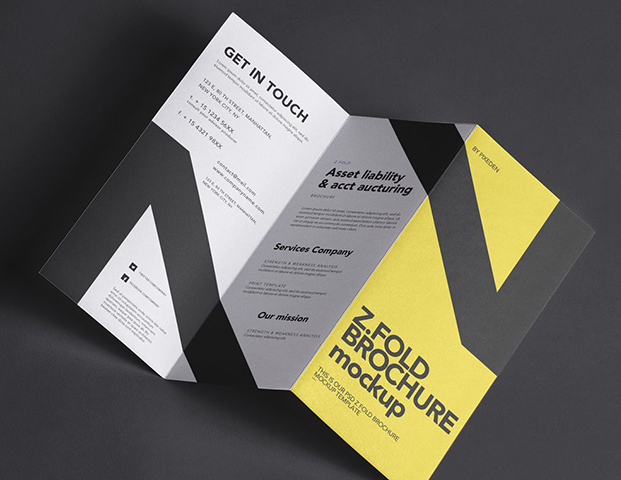
3. Z-fold brochure
Similar to a tri-fold, but folded like a zig-zag accordion. Each panel unfolds outward, creating a wide, panoramic layout.
Best for:
- Roadmaps or travel guides
- Brand storytelling
- Large product visuals
- Exhibition and event information
4. Gatefold brochure
This dramatic style features two side panels that open inward, like gates, to reveal a large central panel.
Best for:
- Luxury brands
- Launches and high-end product reveals
- Real estate
- Event invitations
5. Double gatefold brochure
A more elaborate version of the gate fold. Panels open outward twice, revealing an extended, immersive layout.
Best for:
- High-end product catalogs
- Portfolios
- Real estate and architecture presentations
- Detailed luxury experiences
6. Accordion fold brochure
This brochure unfolds like an accordion, with 4 to 8 additional panels. Think of it as a storytelling strip.
Best for:
- Timelines or brand history
- Educational institutes
- Tourist guides
- Fashion lookbooks
- Event programs
7. Roll fold brochure
Each panel folds inward onto the next, like a gentle roll. Smooth and intuitive.
Best for:
- Step-by-step guides
- Product demonstrations
- Service packages
- Healthcare instructions
8. Flyer / leaflet
A one-page design. No folds, no complications. Simple and fast.
Best for:
- Promotions
- Discount announcements
- Event teasers
- Menus
- Handouts at public places
9. Booklet brochure
A multi-page, magazine-style brochure with multiple spreads stapled together.
Best for:
- Academic programs
- Real estate listings
- Product catalogues
- Annual reports
- Portfolios
10. Pocket / insert brochure
A brochure with built-in pockets that can hold business cards, extra sheets, proposals, or small documents.
Best for:
- Business proposals
- Corporate kits
- Service packages
- Onboarding kits
- Event or seminar material
Frequently asked questions
- Are brochures still effective in the digital era?
Absolutely. Brochures offer a physical touchpoint that digital media can’t replicate. They stay longer with customers, create trust, and make your brand feel more credible and real.
- Which brochure type is best for small businesses?
Tri-fold and bi-fold brochures are the most cost-effective and versatile. They work well for service-based businesses, freelancers, salons, cafes, clinics, and retail stores.
- How many pages should my brochure have?
It depends on what you are sharing. A bi-fold or tri-fold is perfect for concise information, while a booklet works better if you need space for details descriptions, images, or product listings.
Wrapping it up
Brochures may be one of the oldest marketing tools, but they have never lost their power. In a world filled with screens and endless scrolling, a brochure feels personal. It feels intentional. It feels real.
Whether it is a simple tri-fold or a luxurious gate fold, the right design can tell your story in a way that sticks, quietly, visually, and meaningfully.
A well-crafted brochure does not just share information. It creates an experience. It shows your brand off at its best. It stays with your audience long after your conversation ends. And if you choose the format that aligns with your message, your brand, and your customer’s needs, a brochure can become one of the smartest and most memorable pieces in your marketing toolkit.

I am a seasoned designer and content creator for Logo Design Ireland Blog, where I combine design expertise with actionable advice for business owners. My articles cover everything from logo trends and branding psychology to practical design tips that help Irish entrepreneurs elevate their brand identity.